Thieves are stealing SNAP benefits from families, here’s what’s being done
Families continue to lose their SNAP benefits to cyber criminals
ATLANTA, Ga. (InvestigateTV) - Every day, the country’s largest anti-hunger program helps to put food on the table for millions of Americans.
A Pew Research Center analysis found that about one in every eight people received benefits through the Supplement Nutrition Assistance Program.
But we found the program that helps people is often the target of international scammers.
One year after the federal government stopped reimbursing stolen SNAP benefits, fraud has only gotten worse as security measures to protect families’ food money continue to fail.
The U.S. Department of Agriculture (USDA) tasks each state with implementing electronic benefit transfer (EBT) programs. In Georgia, the Department of Human Services (DHS) was one of the first states to roll out a mobile app that allows recipients to lock and unlock their cards. The app was launched in December 2024.
But the solution is falling short as the USDA confirms SNAP fraud could be as high as $12 billion a year.
Benefits lost despite following protocol
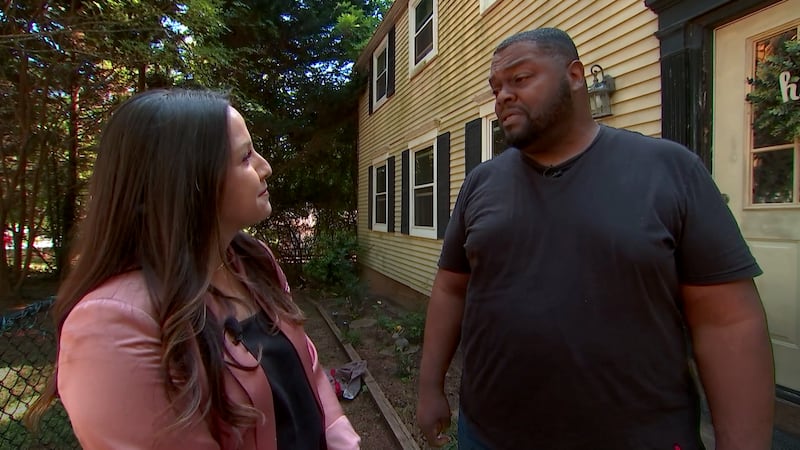
Sheria Robertson is a single mother who cleans houses and is starting her own cat rescue business. She was already struggling to pay rent and put food on the table when criminals stole her SNAP benefits.
“I cried; it kind of really put me back in my depression era that I was in after COVID, when I couldn’t get my feet back on the ground,” Robertson said. “Not being able to feed me [and] my son is hard.”
Robertson had heard the horror stories of families going hungry as criminals continually clear funds from SNAP EBT cards.
She did exactly what DHS, and a handful of other states, had told recipients to do: download the ConnectEBT app and lock the card when not in use.
Robertson said she was standing in line with one person checking out in front of her when she unlocked her card on the app.
“I unlocked it, just that quick gone within a minute,” Robertson said. She discovered her and her son’s food money for Thanksgiving through Dec. 20, 2025, was gone.
“I was like, ‘There’s no way because I just used it down the street here,’” Robertson said.
Fraudulent transactions occur hundreds of miles away
Robertson’s account showed she had just used the card for a $5 purchase at a market one mile away in Bankhead. But there was another purchase over the last minute 900 miles away.
“$607 and some change. All my food stamps were gone in Brooklyn, New York, at a BJ’s,” Robertson said.
Atlanta News First Investigates has received multiple phone calls from SNAP recipients in various states who have also had their benefits stolen at BJ’s Wholesale stores. BJ’s did not respond to requests for comment.
However, the investigation found many of the stores appearing on fraudulent SNAP activity said they have no idea how it’s happening. They are often either not open at the time of the transaction or don’t even accept EBT.
Cyber criminals are hacking store registers called “point of sale systems” and wiring the money elsewhere.
The true scope of the problem
In May 2025, the U.S. Secret Service and USDA confirmed the majority of SNAP fraud is linked to international crime rings.
“It’s big business; this is transnational crime,” said Mark Haskins, chief investigator for USDA Food Nutrition Services. “We’re talking hundreds of millions of dollars a year.”
Haskins spoke with Atlanta News Investigates during a Secret Service operation to locate physical skimmers in Atlanta in August.
While the USDA’s SNAP fraud dashboard displays $250 million stolen in 2024, Haskins said it’s likely 48 times that amount.
“It could be as high as $12 billion a year or could be more” Haskins said. “We don’t know.”
Haskins confirmed the issue is far greater than physical skimmers, with cyber criminals able to guess four-digit pins in seconds and even create fake employee IDs within government agencies.
“I wake up every day saying, ‘What are they going to do to us next?’” Haskins said.
USDA working on prevention efforts
In January 2026, a USDA spokesperson said the agency is working on prevention efforts including implementation of chip cards; mobile payment pilots; grants for state agencies supporting fraud detection and prevention; updated regulatory standards; EBT card locking; encouraging states to block out-of-state and online SNAP transactions by default; and blocking illegal retail point-of-sale devices.
Robertson, like other SNAP fraud victims across the country, is relying on snacks from the food pantry.
“Me and my son are not able to eat,” Robertson said. “There should be something they could do.”
Georgia leads nation in SNAP fraud
According to the last numbers reported on the USDA dashboard, Georgia led the country in SNAP fraud in the first quarter of 2025 with $23 million stolen. The dashboard has not been updated since.
In August, hackers also targeted Georgia’s privately contracted SNAP benefits call center with Conduent in a cyberattack.
The attempt to access electronic benefit transfer (EBT) account information comes as hundreds of millions in taxpayer dollars continue to disappear from accounts across the country.
While Georgia DHS said it cannot disclose all of the security measures the department is working on, it confirmed it is working with its EBT vendor on several fraud mitigation changes to increase card security, including a change to prevent clients from setting soft pins such as 1234.
What to do
DHS recommended every recipient change their PIN now using the official ConnectEBT app and change it often, especially right before benefit deposit dates.
It also recommends using caution online with strong passwords and not clicking suspicious links allowing hackers access to sensitive information.
Recipients should report the incident to the DHS Office of Inspector General (OIG) at inspectorgeneralhotline@dhs.ga.gov or 877-423-4746, option 4.
The OIG team reviews and investigated claims in coordination with partners in law enforcement, according to a DHS spokesperson.
SNAP recipients and vendors to review safety tips on their website here.
After this story first aired, the Georgia DHS wanted to clarify that it has banned the ability to set soft pins and they encourage cardholders to lock their EBT card “everywhere” in between transactions as quickly as possible.
Copyright 2026 Gray Media Group, Inc. All rights reserved.